What to do With a Dead Tree in Your Yard?
A dead tree in the yard is a deadline rather than a decision. The five signs below separate a tree that is dead from one that is only declining — and a declining tree can often still be saved, which is the whole reason to look before you book anything.
Here’s When to Cut Down a Tree in Your Yard
As soon as the tree is confirmed dead, and before the next Santa Ana wind season. A dead tree does not get safer with time: the wood dries and goes brittle, the root plate loosens, and the direction it would fall in gets harder to predict. An arborist confirms whether it is dead or only declining, and a declining tree can often be saved. If it cannot, you get a written estimate covering the tree removal, the drop zone and the clean-up.
5 Signs a Tree is Dead
A dead tree is very different from a declining tree that still has the potential for revitalization, but telling the difference isn’t always straightforward. Here’s our list of the top 5 symptoms to look out for when deciding whether or not your tree is dead.
Trunk Damage. Look out for vertical cracks on the tree as well as bark that easily falls off on its own.
Bare Branches. A telltale sign of a dead tree is bare branches during a time when it should be covered in leaves.
Mushrooms Growing Near the Tree’s Roots. Mushrooms and fungi growing on or near a tree are telltale signs of internal rot.
Damaged Roots. One severe sign of damaged roots is a tree with a considerable lean to its trunk.
Deadwood. Deadwood is exactly that, wood that is dead. If your tree starts dropping branches and limbs, there’s a good chance it’s dead or dying.
Should Dead Trees be Cut Down?
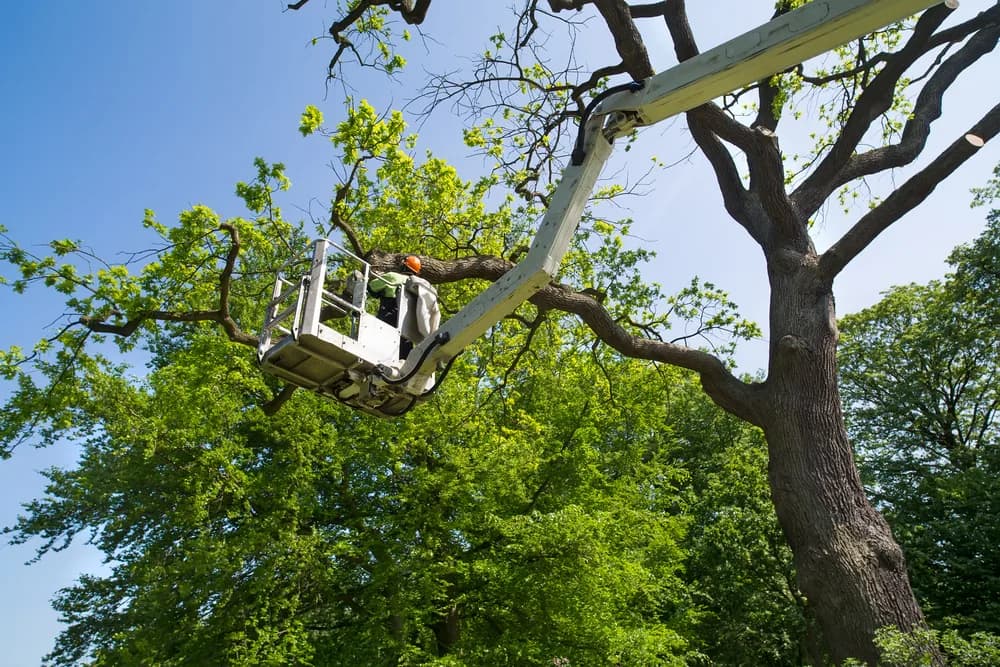
Yes, in almost every case. The exception is a snag standing well clear of anything it could hit, where an arborist may suggest leaving it for wildlife. If it can reach a roof, a fence, a driveway or a neighbor, it comes out, and it is worth moving quickly. You need a licensed tree service with the equipment and the crew for it — a CSLB license carrying the tree classification — C-49 Tree & Palm, or C-61/D-49 on a license issued before 2024 — and ISA Certified Arborists on the job rather than a certified company, because it is arborists who hold the certification. Fully grown mature trees are giant objects and removing them from your property is no easy feat. A mature oak is several tons of green wood before the canopy is counted, and it does not come apart the way it looks like it will. If it fails on its own it chooses its own direction.
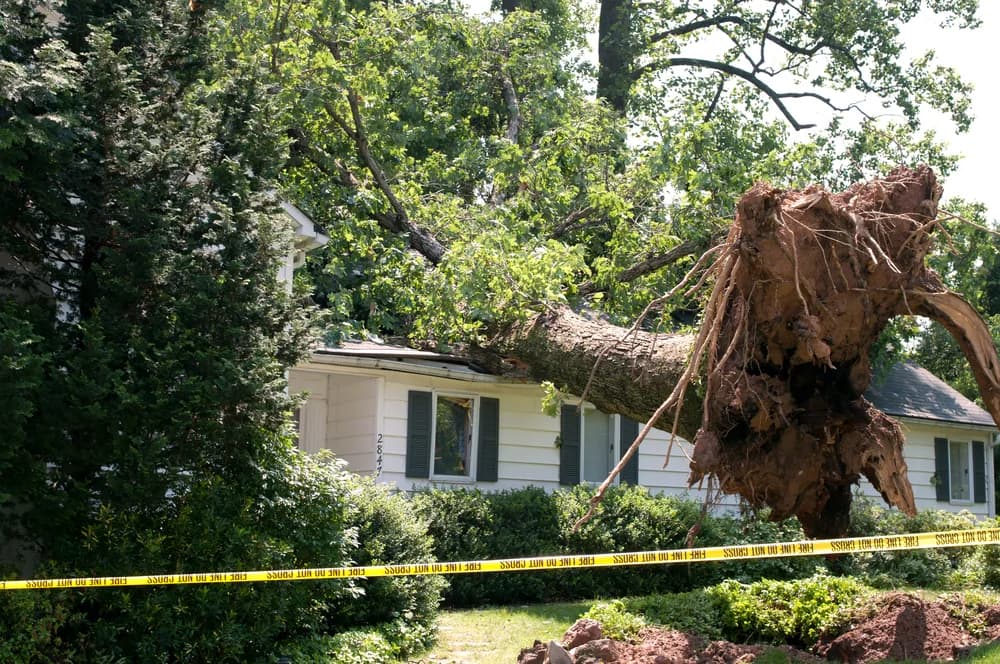
Insurance is the part people get wrong in both directions. A tree that comes through a roof, a fence or a garage in a storm is normally covered. What carriers push back on is a tree that was visibly dead beforehand, because at that point the failure was foreseeable and the claim becomes an argument about negligence rather than weather. Read your own policy rather than assuming either way — and get the dead one out before the question ever arises.
Can I Utilize a Dead Tree as Decoration
Once again, if there’s a chance the tree could fall on your home or cause injury, you need to remove it before anything catastrophic happens. If the tree is safely out of the way, people often try painting or decorating them. This may work without issues, but we almost always advise our clients to remove any and all dead trees for safety reasons. If you must save part of the tree, we recommend collecting loose branches to use as decoration.
How Long Does it Take a Dead Tree to Fall?
Anywhere from a few weeks to several years, and the variable is the root plate rather than the trunk. A tree killed at the roots can come over whole in the first wet storm of the season; one that died standing, from drought, can hold for years and shed limbs one at a time instead. It can take a couple of days or even years for a dead tree to finally fall. This is why we always recommend getting rid of trees as soon as you know they’re dead. Therefore, you won’t have to worry about the next time a large storm comes rolling in. Would you rather be safe or sorry?
Closing Thoughts
Here at Supreme Tree Experts, our number one concern is always safety. We don’t just mean the safety of your trees, but also the safety of your property, family, and peace of mind. We never recommend taking a tree down yourself. Dead wood is brittle and it fails without warning, which is what makes a dead tree a rigging job rather than a ladder job. If you suspect a tree on your property has died, have an ISA Certified Arborist look at it before the next wind season. The visit and the written estimate cost nothing either way.