Commercial Tree Service in Santa Ana & Southern California
Tree care for HOA boards, property managers, commercial landlords and developers across Southern California, from our base in Santa Ana, CA — scheduled by property, priced per visit, and answered 24 hours a day when something fails.
Trusted by Southern California property owners(opens in a new tab)
How commercial tree work differs from a residential job
The scope has to survive a board meeting. A homeowner decides on the spot; a common-area tree removal goes through a manager, a board and a reserve line written a year earlier. Under the Davis-Stirling Act, Civil Code 4775 puts the duty to maintain the common area on the association — so a board buys tree work as an approved scope, not as a call-out. Which is why a commercial bid is built off a walk of the property, item by item, rather than off a description over the phone.
The Case For It
What scheduled tree care returns to a commercial property
Tree care is the line that gets deferred, because a tree still standing does not look like a problem. On a commercial site it is the largest single object on the property, and usually the only one nobody is currently responsible for.
A frontage that reads as maintained
Tenants, buyers and inspectors read the grounds before they read anything else. Trees on a cycle hold their shape between visits. Trees left until somebody complains get cut hard — and a hard cut shows for years.
Shade where people actually stand
Parking bays, walkways and outdoor seating are the parts of a commercial site that go unusable in a Southern California summer. Canopy over them is the only thing that fixes it, and keeping that canopy is a pruning decision rather than a planting one.
Less heat reaching the building
Shade on a west wall and a roof keeps heat out of the structure before the HVAC has to remove it, and a transpiring canopy cools the air moving past it. Both effects come from the same crown, and both disappear when it is topped.
A quieter, better-screened site
A planted screen between a property and an arterial takes the edge off traffic noise and holds down the grit that travels with it. Screens only work while they stay dense, which is a shrub shearing schedule rather than a one-off cut.
Value that cannot be installed quickly
Mature trees are the part of a commercial landscape money cannot shortcut, which is exactly why they carry value. A specimen that took 40 years to build is not replaceable inside a refurbishment budget — losing one to neglect takes it off the asset permanently.
A smaller tree budget over time
Trees on a three-to-five year cycle are pruned while the cuts are small and the crew is already on site. The same trees left alone produce call-outs, structural damage and tree removals — every one of them priced against urgency instead of against a calendar.
Pricing
How much does commercial tree service cost?
Per visit, against a scope written after the site has been walked — and on a commercial property the variable is rarely the trees. Two office parks carrying the same 60 trees can be quoted very differently, and the difference is when a crew may be on site, what has to be closed while they are, and where the machine can stand.
$600Minimum charge for tree services. Everything above it is priced on the tree itself.
The 6 things a commercial scope is priced on
01
When a crew may be on the site
Before opening, after close, weekends, or the gaps between classes. The same scope worked in four short windows instead of two full days is four days of travel and set-up, and days are what a quote counts.
02
What has to be closed while they are
Cones, signage, a flagger, and the bays or drive aisle the chipper and the brush occupy until the work is done. On a property that keeps trading through it this is its own line, and on a tight site it is the largest one.
03
What the machine needs to stand on
A boom or a crane needs outriggers on ground rated to take them and a footprint that stays clear while it works. On a developed site the footprint is the scarce thing rather than the machine, and it decides whether a tree is two hours or half a day.
04
Putting the site back before people arrive
Lots swept, walkways blown clear, bays reopened and a frontage clean by the time tenants or customers turn up. On a residential job that is the clean-up; here it is a scheduled part of the day with a deadline on it.
05
Catch-up work against cycle work
A property coming onto a program after years of deferral is two numbers rather than one — the catch-up, which happens once, and the cycle, which does not. They frequently belong in different budget years, and separating them is usually what gets the first one approved.
06
How many properties go in one run
A portfolio scheduled as a single route pays for the mobilization once. The same buildings booked on eight separate dates pay for it eight times, and nothing about the tree work has changed.
Two commercial bids are rarely for the same work, which is what makes the cheaper number misleading. A scope that lists the trees, the operation on each and the priority can be compared against another one; a line that reads "trim trees as needed" cannot be compared against anything. Ask everyone bidding for the tree-by-tree version — the walk and the written scope cost nothing here, and they should cost nothing anywhere.
Commercial Scope
Commercial tree care, operation by operation
Every property needs a different combination of these, and most need several on the same visit. An arborist walks the site and tells you which ones the trees in front of you actually call for — there is no standard package, because there is no standard property.
Maintenance pruning on a set rotation, usually every three to five years depending on species and position. Structure is corrected while the cuts are still small, and defects come out before they become incidents rather than after.
Crown Cleaning
02
Dead, dying, diseased and broken wood taken out of the canopy — and nothing else. Size and shape are left alone. On a commercial site it is the quickest way to remove what is most likely to land on a walkway.
Crown Reduction
03
Height and spread brought in for a tree that has outgrown a frontage, a roofline or a sight line. Done with reduction cuts back to laterals, each one to a limb big enough to take over — a third the diameter of what came off is the figure the standard suggests — never as topping.
Crown Raising
04
Lower limbs removed to open clearance over walkways, drive aisles, parking bays and signage. The live crown stays at roughly two-thirds of the tree's height, because lifting past that takes the foliage that builds trunk taper.
Clearance Tree Trimming
05
Growth pulled back off buildings, signage, light standards, cameras and fire access lanes — on the same cycle as everything else, or as a one-off ahead of an inspection.
Palm Maintenance
06
Fronds, seed pods and boots on the palm trees that line most commercial frontages here, worked from a lift truck. A Mexican fan palm dropping seed needs it twice a year; most other species once.
Hedges, Screens & Topiary
07
Formal hedges, boundary screens and shaped specimens held to a line, with selective pruning underneath so the plant does not go hollow behind the face it presents.
Planting & Replacement
08
Replacement trees for gaps and failures, chosen on mature size and root behavior rather than on what looked good at the nursery. A species picked badly is the tree removal somebody budgets for in 10 years.
Property Types
Tree care by the kind of property it is on
The trees are the same. What changes is who signs it off, when the work is allowed to happen, and what the site cannot afford to have go wrong.
01
HOAs & Community Associations
Boards, managers and common-area trees
The board is buying an obligation, not a tree job. Under Civil Code 4775 the association has to maintain the common area, and under Civil Code 5550 the reserve study has to be reviewed at least every three years — so tree work that arrives as an approved scope on a cycle fits how a board is required to run, and a call-out does not.
What an association program usually consists of
Common-area tree inventory
Cycle tree pruning by the budget year
Clearance over walkways and drive aisles
Hazard and declining tree removal
Root and hardscape conflict
Emergency cover between visits
02
Government & Municipal
Cities, agencies, parks and public rights of way
The record of the work is part of the defence. A street tree that fails puts the agency into the claim, so municipal work is bought as an inventory and a cycle rather than as a list of complaints.
What a municipal program usually consists of
Inventory and cycle tree pruning
Clearance tree pruning
Hazard and dead-tree removal
Storm and wind response
Restorative tree pruning
Traffic control and site protection
03
Hotels & Hospitality
Hotels, resorts and hospitality grounds
The calendar is the constraint, not the tree. Work fits around check-in, events and the porte-cochère — and palms come first, because a dead frond over a pool deck is a safety item rather than a tidiness one.
How the work is fitted around guests
Work windows agreed first
Palms on an annual cycle
Entrance and valet clearance
Terrace and pool-deck shade
One crew, cleared each evening
04
Construction & Development
Site clearing, tree protection and arborist reports
Two jobs, and the second one gets missed. Clearing is straightforward; the trees that stay need a protection zone, because a tree killed by grading dies two or three summers after sign-off.
What a development site usually needs from an arborist
Site clearing
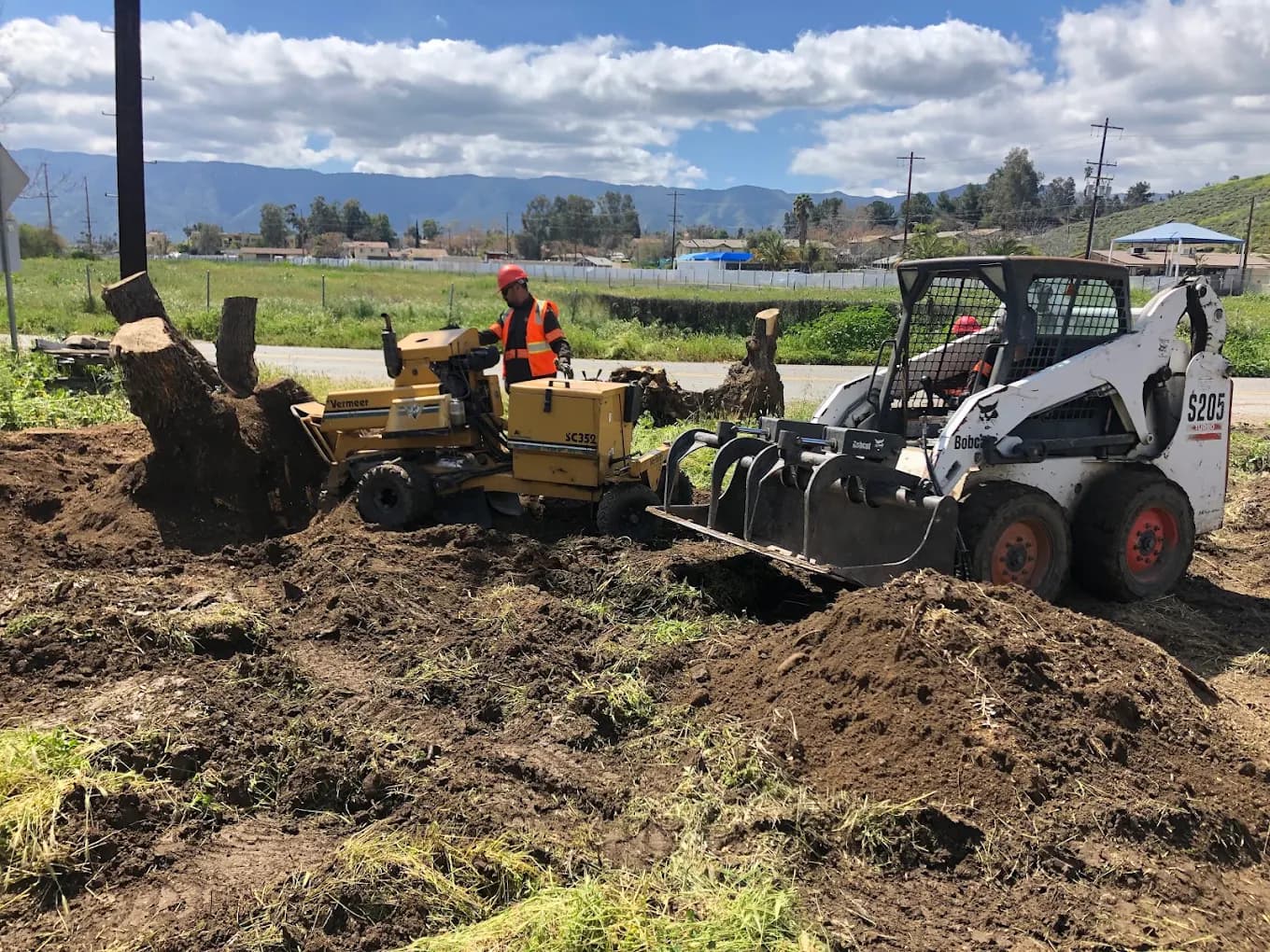
Stump grinding and root-ball removal
Haul-off and clean-up
Tree protection zones
Root-sensitive service routes
Arborist reports for permit conditions
05
Golf Courses
Courses, clubs and superintendent-led grounds
A tree problem on a course is a turf problem first. Morning sun on a green decides how much disease pressure it carries, and roots compete with the putting surface for the same water.
How course tree work is usually planned
Morning sun on greens and tees
Root competition at the collar
Shot corridors and cart paths
Hazard trees on play areas
Specimen trees that frame a hole
Work between rounds
06
Shopping Centers
Open-air retail centers and parking fields
The recurring argument is a tenant's sign behind a tree. Shade and visibility are the same canopy — and under the asphalt, lifted paving is a trip claim with a date on it.
What a center gets worked on, and in what order
Deadwood over bays and walkways
Drive-aisle and footway clearance
Tenant sign lines
Shade held over parking
Root heave and trip hazards
Work outside trading hours
07
Schools & Universities
Districts, campuses and university grounds
A campus contractor is regulated before the first cut. Education Code 45125.1 sets the background-check standard, and anything loud belongs in a break rather than outside a classroom in week three.
How a campus program is normally built
Hazard work over play areas
Scheduled into breaks
Clearance and sight lines
Heritage and specimen trees
A cycle rather than a call-out
Out-of-hours response
08
Malls & Plazas
Enclosed malls, plazas and pedestrian hardscape
You usually cannot drive to the tree. Hardscape the whole way in, a deck with a load limit, and most plaza trees living in a planter with a fraction of the root volume they need.
What working a plaza actually involves
Access planned before the quote
Overnight and pre-opening windows
Rigging over finished surfaces
Deadwood first, every visit
Planter soil and irrigation
Paving lift around tree pits
09
Landscape Contractors
Subcontracted tree scope for maintenance contractors
The line is the license. Where the tree work is the job rather than incidental to the landscape, subcontracting that scope keeps your license and your insurer out of it — and keeps the account yours.
What subcontracting the tree scope looks like
Our license, our insurance
Scheduled around your rotation
Your account stays yours
Equipment your crew does not carry
The jobs that come up most
24/7 for what happens between visits
10
Corporate Real Estate
Multi-site portfolios and asset managers
The buyer is managing a schedule of assets, not a tree. An inventory and a cycle is the only version of a tree budget that forecasts; anything else is last year's actuals plus whatever failed.
What a multi-site program is built on
Inventory by site
A cycle, not a call-out
Scope approved item by item
Tenant-facing frontage first
Condition reporting for owners
One number, 24 hours
11
Business & Industrial Parks
Business parks, industrial estates and logistics sites
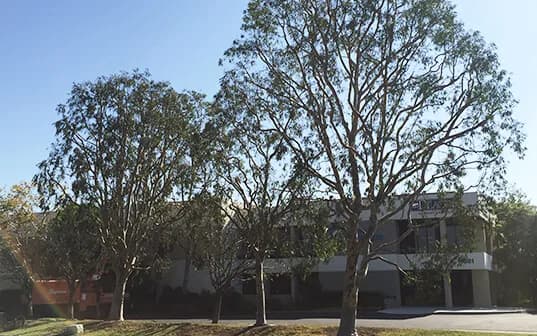
It is usually the row that was planted at build-out. Eucalyptus grows faster than its own wood strengthens, and clearance here is set by trailer height rather than by people.
Commercial tree service HOAs and managers trust: Supreme Tree Experts
A board buys tree work as an approved scope, not a call-out. So an arborist walks the site and records every tree, not a sample. The work is priced line by line and grouped by priority. A board or owner can approve it in stages.
Visits are booked ahead of the wind season and carried out to the plan. Lots are swept and walkways cleared before tenants arrive. Between visits, we answer calls 24 hours a day. We never top a tree, and a COI is available on request.
ISA Certified Arborist
An ISA Certified Arborist walks each property. The arborist records every tree, sets the operation for each one and ranks the work by priority.
Licensed, Bonded & Insured
CA license #1002853 covers C-27 Landscaping and C-61/D-49 Tree Service. We are bonded, carry general liability, and every employee has workers' comp for work on shared sites.
Southern California Since 1985
We have worked on trees across Southern California since 1985. We schedule pruning cycles and palm work ahead of the wind season.
Our Own Equipment
Our own 75-ft boom trucks, lift truck for palms and chippers cover the full scope. Our haulers clear the brush before people arrive.
Our Process
How a commercial account is set up
01.
Property walked and recorded
An arborist drives out from the Santa Ana, CA yard, walks the site and records the trees — species, size, condition and what each one is standing over — so the scope is written against something real.
Free site walk
Every tree recorded, not sampled
02.
A scope a board can approve
The work is priced item by item and grouped by priority, so a board or an owner can approve it in stages rather than as one number at the bottom of a page.
Line-by-line scope
Staged by priority
03.
The tree work scheduled, worked and repeated
Visits are scheduled ahead of Santa Ana wind season, carried out to the plan, and what changed on site is recorded for the next cycle.
Booked around wind season
24/7 cover between visits
Service Area
Where we work across Southern California
5 counties — Orange, Los Angeles, San Diego, Ventura and Santa Barbara — worked by crews running out of Santa Ana. These 7 areas are where most of it happens. Call 877-787-7363 if you are not sure whether your address falls inside them.
Every word below was written by a customer on Google, not by us. Long reviews are shortened to fit the card — never reworded — and the full list is one click away.
“Great pricing & service. Highly competent with tricky jobs. We have used them for more than 10 years.”
Melanie Butler
Local Guide
“We got bids from five contractors. After I talked to them all and checked out their licenses and work, we decided to go with Supreme. … The job took a day and a half, and when they were done, they left the place immaculate.”
Hank Shaeffer
“Great tree trimmers! I’ve used Supreme Tree Experts twice to trim the palm trees in my yard. … The guys who come out are quick thorough, and clean. And very careful not to damage property.”
Emilie Pacheco
“These guys have worked on my property 3 times now. They are always on time and do a fantastic job. I highly recommend them!”
Ray Thompson
“After soliciting several quotes on some difficult yard work, we chose Supreme because of their licensed Arborist Temis … The crew was extremely hard working and we couldn’t believe their continuous work ethic on one of the hottest days of the year.”
Gary Brown
Local Guide
“Had them take out some tall eucalyptus trees on my lot in Hollywood. Great service. Fast, friendly and professional.”
Property types, the service list, contracts, insurance, liability, permits and scheduling — what a board or a manager asks before putting a contractor on site.If yours is not here, call 877-787-7363 and ask.
01
Homeowner associations, property management portfolios, commercial landlords, developers and municipalities — in practice that means HOA common areas and streetscapes, office parks, retail centers, apartment and condominium complexes, industrial sites, and school and church grounds — across Southern California. What they have in common is a decision-maker who is not the person living under the tree, and a budget set before the tree became a problem.
02
Every service we offer residentially, scheduled across a property instead of booked one tree at a time. Tree trimming, tree pruning and tree removal are the bulk of it, with stump grinding, palm trimming, crown reduction and hedge and shrub shearing around them. 75-foot boom trucks, a lift truck for palms, chippers and grinders are ours rather than sub-hired, and a crane lift is booked and coordinated by us, so one contractor stays responsible for the whole scope.
03
Yes — a set cycle across the whole property, priced per visit. Every tree is recorded once, grouped by how often it needs attention, and the visits are booked ahead of Santa Ana wind season rather than after it. That is the difference between a line a board approves in advance and an unplanned invoice once a limb is already down. The cycle is built off the first walk of the property and adjusted as the trees change.
04
Yes. California license #1002853 covers C-27 Landscaping and C-61/D-49 Tree Service, we are bonded, we carry general liability, and every one of our employees is on workers' compensation. Ask any contractor bidding your property for their license number and check it on the CSLB website before the board votes — on a common area, an uninsured crew becomes the association's problem rather than the contractor's.
05
By taking the defect off before it fails, and by leaving a record of when each tree was last looked at. A limb over a walkway, a parking structure or a play area is an exposure while it is still attached. Deadwood, over-extended limbs and split unions are what go first in a Santa Ana wind event, and every one of them is visible to an arborist months beforehand — which is the whole argument for inspecting on a cycle instead of after a storm.
06
The permit sits with the property owner, and an arborist tells you exactly which rule applies before anything is scheduled. Requirements are set by city rather than by the state. In Santa Ana, our home city, it is Chapter 33, Article VII of the Municipal Code, which regulates trees in the public right of way and leaves a tree inside a property line out of it. Elsewhere, species, trunk diameter, whether the tree stands in the public right of way and whether the site falls under a protected tree ordinance all change the answer, and they differ from one city to the next. The work is then carried out to whatever that ordinance requires.
07
Yes, including weekends. We work Monday – Friday 7:30 AM – 6:30 PM, Saturday 8:00 AM – 5:00 PM and Sunday 10:00 AM – 4:00 PM, so work on a drive aisle, a parking lot or a retail frontage can be put where it costs the fewest tenants. Crews and boom trucks are ours, so the date is set against our own calendar, and where a lift needs a crane we book it into the same window rather than handing you a second contractor — and emergency cover runs 24 hours a day for whatever happens between scheduled visits.